Rodents can damage the outer jacket of an optical cable and continue gnawing until they reach the cable core. A rodent-resistant fiber optic cable adds one or more protective layers that make this penetration more difficult. The right design is not simply the cable with the most armor: it is the design that matches the animal risk, installation route, electrical environment, pulling conditions, closure system and maintenance plan.
For severe direct-buried or accessible outdoor routes, a metallic barrier such as corrugated steel tape is commonly the strongest starting point. Where the cable must remain all-dielectric, glass yarn or flat FRP/GRP protection may be more suitable. Polyamide jackets and repellent additives can be considered for specific environments, but buyers should request evidence for the complete cable rather than approving a material name alone.
Rodent-resistant fiber optic cable: quick comparison
| Protection method | How it helps | Main advantages | Main questions before ordering |
|---|---|---|---|
| Corrugated steel tape | Creates a hard barrier around the cable core | Strong physical protection; compact compared with some heavy armor systems | Grounding/bonding rules, corrosion environment, bend radius, joint and entry hardware |
| Galvanized steel wire or tape | Adds a robust metallic layer and can support demanding mechanical conditions | Suitable where rodent, crush, impact or tensile risks must be considered together | Cable weight, pulling load, termination, grounding/bonding and installation hardware |
| Flat FRP/GRP armor | Uses non-metallic reinforced elements around the core | All-dielectric construction; avoids a metallic armor layer | Coverage, flexibility, crush performance, cable diameter and verified rodent test method |
| Glass yarn | Forms a dense non-metallic layer that discourages continued gnawing | Light, all-dielectric and useful for many indoor/outdoor or aerial designs | Yarn coverage, target rodent risk, moisture design and whether it is suitable for direct burial |
| Polyamide sheath or repellent additive | Makes the outer surface harder or less attractive to bite | Can supplement another protective structure | Thickness, durability, environmental exposure, safety documentation and long-term evidence |
No row is a universal specification. A supplier must confirm the complete construction and test limits for the exact cable offered.
Why do rodents damage fiber optic cable?
Rodent exposure depends on the species, route and local environment. Corning’s application engineering note identifies direct-buried, aerial and confined-space risks: burrowing animals may reach buried routes, squirrels can access aerial cables from nearby trees, and rats may enter manholes, tunnels or other enclosed spaces.
The optical fiber itself is not the only issue. Once the jacket is opened, moisture protection, strength members, loose tubes and fibers can all be compromised. The result may be an immediate outage or a damaged section that becomes unreliable later.
Rodent protection therefore works at two levels:
- Route protection: duct, conduit, concrete, suitable burial practice, sealed entries and vegetation management reduce access.
- Cable protection: armor, reinforced layers or deterrent materials slow or prevent penetration toward the cable core.
Do not use a special cable as a substitute for poor route design. A protected cable left exposed at an open duct, cabinet entry or low aerial transition can still create a vulnerable point.
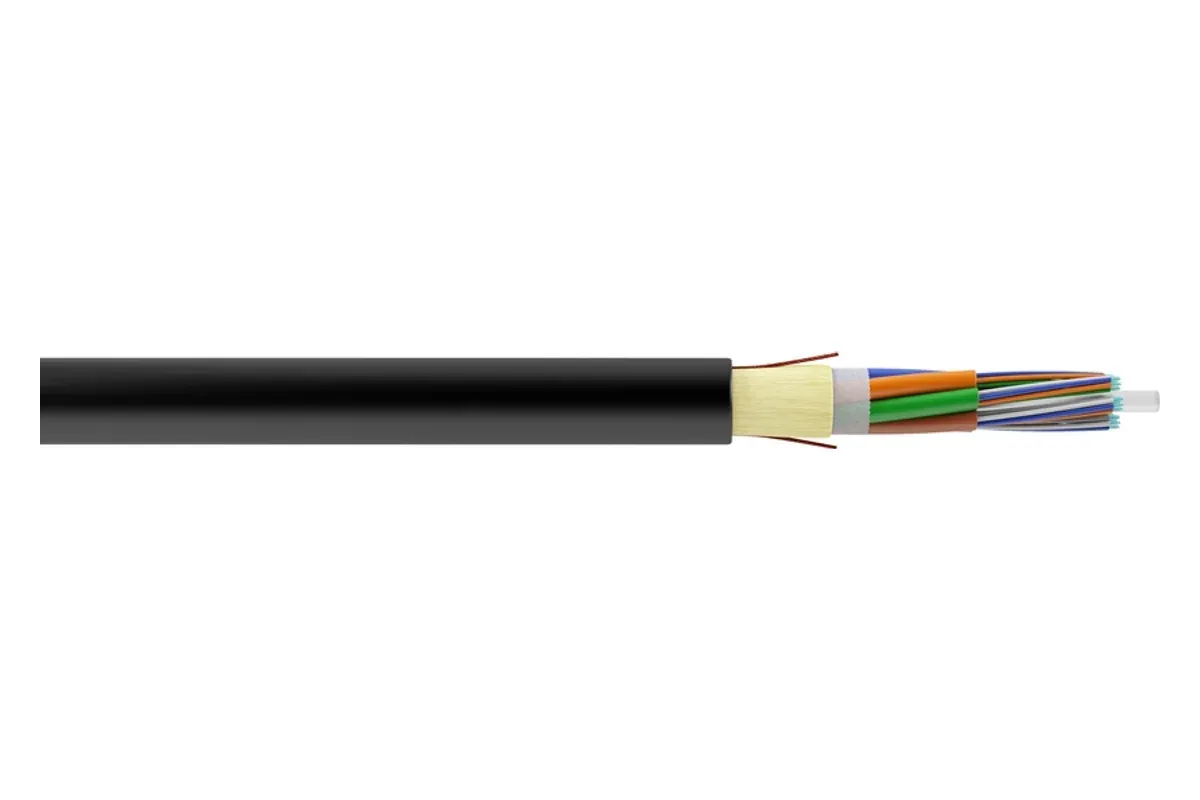
Method 1: corrugated steel tape armor
Corrugated steel tape is wrapped longitudinally around the cable core to create a hard physical barrier. Corning describes corrugated carbon steel tape as the most widely accepted rodent-protection method in its engineering guidance. Prysmian also lists copolymer-coated corrugated steel tape among the common metallic protection systems.
This construction is often the first option to evaluate for routes with serious gnawing risk, especially when rodent exposure exists together with mechanical hazards. Corrugation helps the tape follow the cable while maintaining protective coverage.
However, “steel tape armored” is not a complete purchasing specification. Confirm:
- tape material, coating and overlap;
- inner and outer sheath construction;
- corrosion conditions and water-blocking design;
- maximum tensile and crush requirements;
- minimum bend radius and pulling method;
- metallic-element grounding and bonding requirements;
- closure, gland and cabinet-entry compatibility.
The project must also decide how armor continuity is managed at joints and terminations. A cable body can be well protected while an incorrectly prepared entry point remains exposed.
Method 2: galvanized steel wire or helically applied steel tape
Steel wire armor or helically applied steel tape provides a metallic barrier with additional mechanical capability. Prysmian notes that these constructions are used where high crush, impact or tensile demands may exist together with rodent exposure.
This does not mean that steel wire is automatically better than corrugated tape. The heavier construction can change drum length, transportation, pulling tension, bend radius and hardware selection. The buyer should compare the installed system rather than only the armor layer.
Ask whether the route truly needs the extra mechanical function. For a severe buried crossing, industrial route or high-risk transition, it may be justified. For a protected duct with moderate exposure, the weight and installation cost may be unnecessary.
Method 3: flat FRP or GRP non-metallic armor
Flat FRP/GRP elements can surround the cable core without introducing a metallic armor layer. This is useful when the project requires an all-dielectric cable or wants to avoid metallic armor grounding and bonding.
Non-metallic does not mean unprotected, and metallic does not automatically mean appropriate. The important questions are how much of the core is covered, how the reinforced elements behave during bending and pulling, and whether the finished cable has evidence for the expected rodent risk.
Flat reinforced elements can also affect cable stiffness and diameter. Confirm that the proposed design can pass through the intended duct, sheave, gland and closure without violating the approved bend radius.
Method 4: glass yarn protection
Glass yarn is placed densely around the cable core or inner sheath. When a rodent penetrates the outer jacket, the glass layer discourages continued gnawing. Current CommScope rodent-resistant indoor/outdoor cable designs demonstrate that E-glass yarn can provide both reinforcement and rodent resistance in an all-dielectric construction.
Glass yarn can be attractive for aerial, indoor/outdoor and other routes where low weight and non-metallic construction matter. It should not be treated as equivalent to every steel-armored design. One manufacturer explicitly limits a glass-yarn rodent-deterrent product to small, non-burrowing rodents and does not recommend that product for direct burial. That example illustrates why the exact application statement matters more than the generic material name.
For a glass-yarn cable, ask for:
- the intended installation environment;
- the rodent-risk level covered by the design;
- yarn type and coverage around the core;
- tensile and crush limits of the finished cable;
- moisture and water-blocking construction;
- test method, sample construction and acceptance criteria.
Method 5: polyamide sheath and repellent additives
A hard polyamide outer layer can make the surface more difficult to penetrate and may also be selected where termite exposure is part of the project. Chemical or taste-deterrent additives are another approach used in some jacket compounds.
These methods require careful qualification. Ask how long the protection is expected to remain effective under UV, water, soil, temperature and abrasion exposure. Request material safety information and confirm any site restrictions. If the route has severe rodent risk, a surface treatment should not be assumed to replace a verified physical barrier.
For many projects, a polyamide sheath or additive is best evaluated as part of a layered design rather than as a one-line “rodent-proof” claim.
How should buyers choose the protection method?
1. Identify the route and access points
Separate the project into direct-buried, duct, manhole, tunnel, building, cabinet-entry and aerial sections. The same protection may not be needed for every section. Transitions near trees, drainage areas, food storage, farms, rail corridors or open chambers may carry different exposure.
2. Define metallic or all-dielectric requirements
If the cable will be installed near power infrastructure, in a lightning-sensitive route or where metallic elements are restricted, an all-dielectric FRP/GRP or glass-yarn design may be necessary. If metallic armor is allowed, the design team must specify grounding, bonding and termination practice.
3. Combine rodent and mechanical requirements
Rodent risk is only one part of the cable specification. The selected construction must also meet pulling tension, crush, impact, bend, temperature, water-blocking, UV, fire-performance and sheath requirements for the actual route.
4. Compare the complete installed cost
Include cable price, drum length, freight, pulling equipment, labor, glands, closures, grounding accessories, duct protection, testing and repair access. A lower-priced cable may cost more if it needs additional conduit or creates difficult terminations.
5. Require evidence for the finished cable
Do not accept “anti-rodent” as the test report. Ask which construction was tested, what method was used, what animal or simulation was involved, how long the exposure lasted and what counted as a pass. General compliance with an optical-cable standard does not, by itself, explain the rodent-resistance claim.
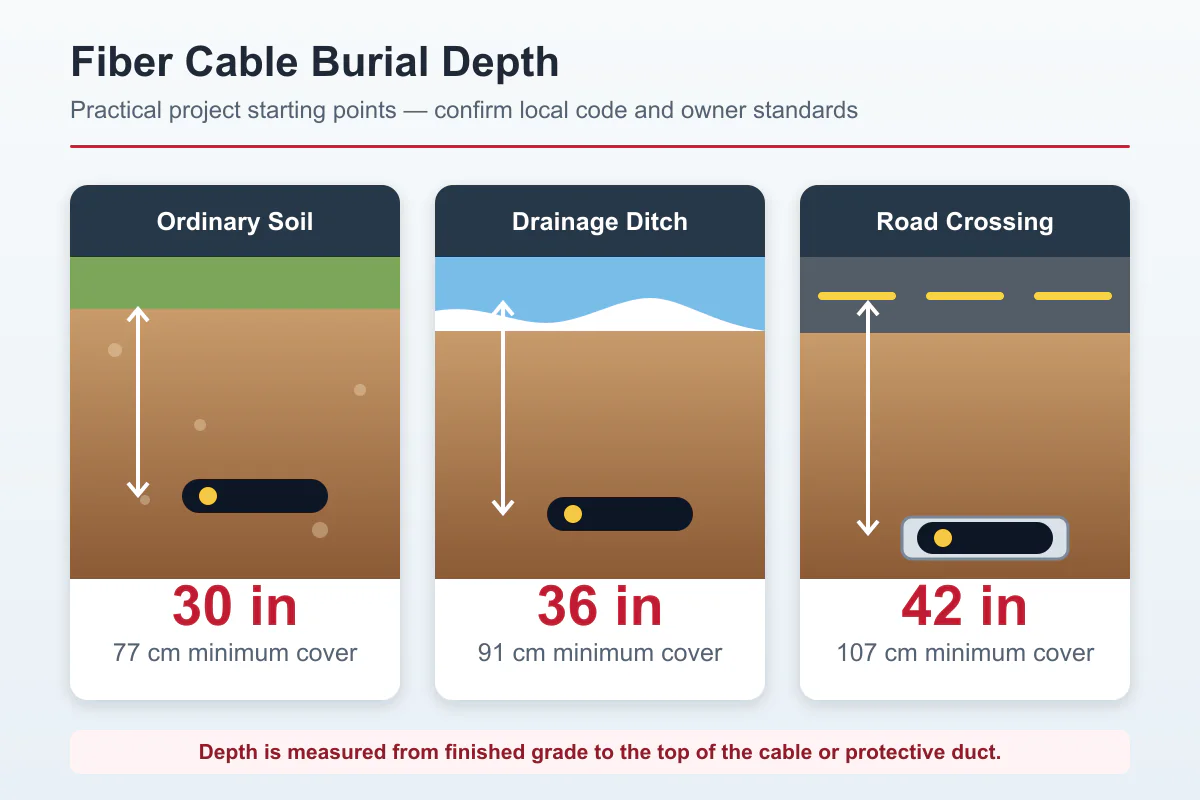
For more installation planning context, read our fiber optic cable burial depth guide and indoor vs outdoor fiber optic cable comparison.
Rodent-resistant cable RFQ checklist
Include the following information when requesting a quotation:
- route type: aerial, duct, direct buried, tunnel, building or mixed;
- expected rodent species or documented site damage;
- metallic or all-dielectric requirement;
- preferred protection: steel tape, steel wire, FRP/GRP, glass yarn, polyamide or supplier proposal;
- fiber count and verified fiber type;
- cable construction, loose-tube or tight-buffer requirement;
- tensile, crush, impact and bend requirements;
- water-blocking, UV, flame and temperature requirements;
- drum length, route length and installation method;
- closure, gland and cabinet-entry interfaces;
- required standards and test reports;
- quantity, destination country and requested delivery schedule.
If the project does not yet have a final construction, provide the route drawing and risk information instead of guessing a cable code.
Discuss a project-specific cable construction
NetLast supplies fiber optic cable and related network-deployment products. Send the route, fiber count, metallic or all-dielectric requirement, rodent risk, mechanical limits, drum length, quantity and destination. NetLast can review the missing information and confirm an available project configuration, supporting documents and current production timing.
Explore the NetLast Fiber Optic Cable category or send your cable requirements.
FAQs
Is rodent-resistant fiber optic cable completely rodent-proof?
No cable should be treated as impossible to damage in every environment. “Rodent-resistant” describes a protective design, while actual performance depends on the construction, animal, route, exposure and installation. Require evidence and protect access points.
Is steel tape better than glass yarn for rodent protection?
Steel tape generally provides the stronger physical barrier and is widely accepted for serious exposure. Glass yarn offers a lighter, all-dielectric option that may suit moderate risks and routes where metal is not allowed. Compare complete cable evidence and the installation environment.
Can ADSS cable be made rodent-resistant?
An aerial all-dielectric cable can incorporate non-metallic protective elements, but “ADSS” alone does not prove rodent resistance. Confirm the exact construction, span and mechanical requirements, rodent-protection method and test evidence.
Does a PE jacket stop rats from biting fiber cable?
A normal PE jacket provides environmental protection but should not be assumed to stop sustained gnawing. Rodent-resistant designs add a barrier or deterrent layer beneath or around the jacket.
Does armored fiber optic cable require grounding?
Metallic armor introduces electrical design considerations. The project must specify grounding, bonding and termination according to the cable construction and applicable local rules. All-dielectric FRP/GRP or glass-yarn designs avoid a metallic armor layer.
What should be included in a rodent-resistance test report?
The report should identify the tested cable construction, sample size, test or exposure method, duration, acceptance criteria, damage assessment and result. The buyer should confirm that the report covers the offered cable rather than a different family design.