ADSS and OPGW both carry optical fiber along overhead power routes, but they are not interchangeable. ADSS is a non-metallic, self-supporting communication cable. OPGW is a metallic overhead ground wire that also contains optical fibers.
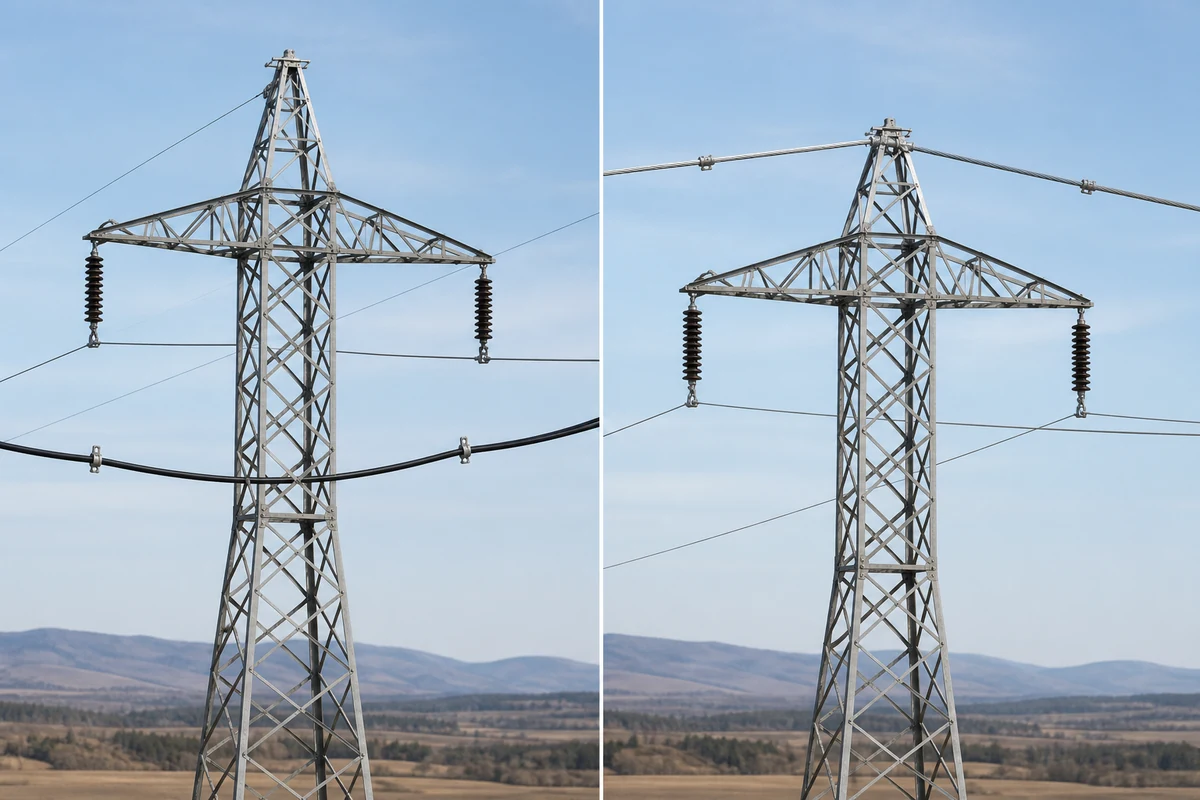
That functional difference drives almost every purchasing decision. OPGW is normally placed in the shield-wire position at the top of a transmission structure, where the cable must contribute to lightning protection and carry fault current to ground. ADSS is attached in an approved position below the phase conductors and does not replace the ground wire.
For a new transmission line or a planned ground-wire replacement, OPGW is often the natural starting point. For adding fiber to an existing route while retaining the current ground wire, ADSS may be easier to deploy—provided the utility approves the attachment zone, electrical-field conditions, mechanical design and work procedure.
ADSS vs OPGW: quick comparison
| Selection point | ADSS cable | OPGW cable |
|---|---|---|
| Full name | All-Dielectric Self-Supporting cable | Optical Ground Wire |
| Main function | Optical communication | Ground-wire protection plus optical communication |
| Construction | Non-metallic optical cable with dielectric strength members | Optical unit protected inside a conductive metallic strand structure |
| Typical position | Utility-approved attachment point below the phase conductors | Top shield-wire or earth-wire position |
| Electrical role | Does not carry intentional fault current | Must provide a designed path for lightning and fault current |
| Main electrical concern | Electric-field exposure, sheath tracking and dry-band arcing | Conductivity, fault-current capacity, lightning performance and grounding continuity |
| Typical project fit | Adding communications to an existing utility route; transmission or distribution applications | New transmission lines or replacement of an existing shield wire |
| Cost comparison | Often simpler for a retrofit, but jacket, hardware and pole work matter | Combines two functions, but tower loading, stringing and outage planning can be significant |
This table is a screening guide, not a cable specification. The correct design still depends on the power-line configuration, span, loading, fault level, installation method and utility standard.
The main difference: communication cable versus electrical system component
The most important difference between ADSS and OPGW is not fiber count or cable diameter. It is the job the cable performs in the power system.
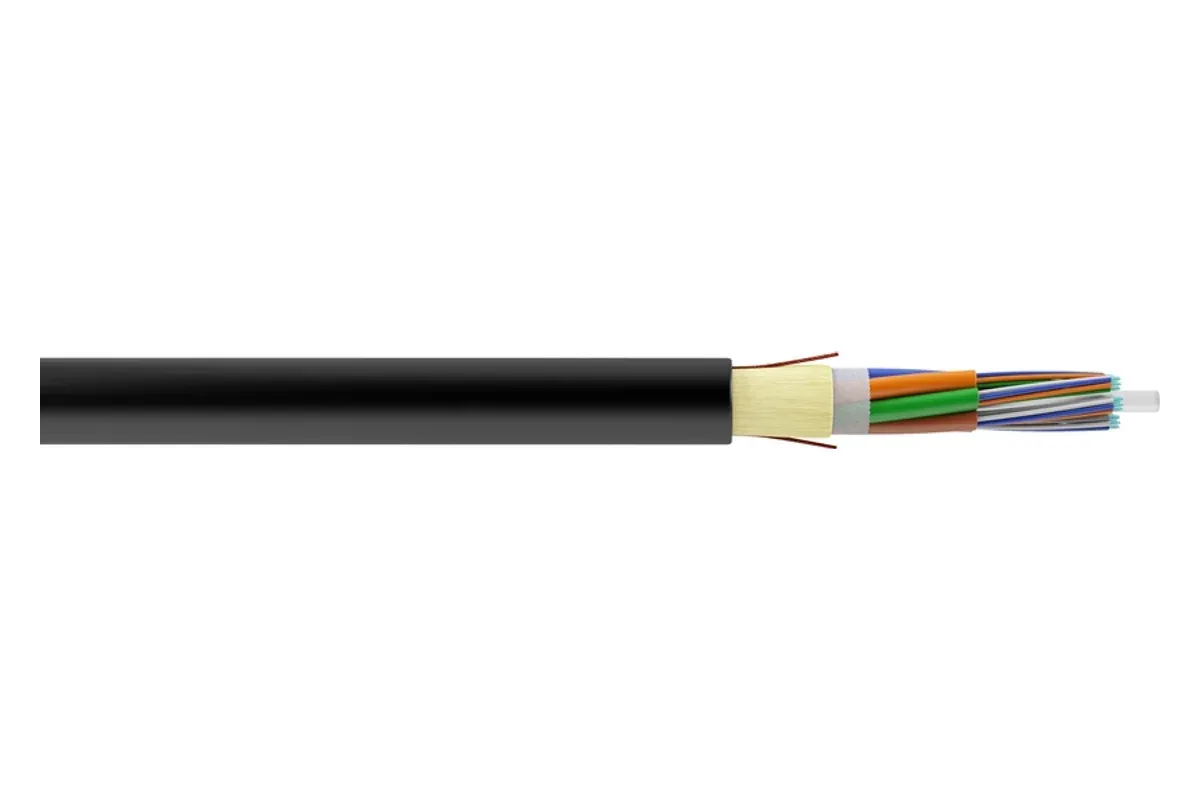
ADSS carries optical signals and supports its own mechanical load between structures. Because it contains no metallic element, it does not need a separate messenger and does not become the line’s grounding conductor. Its cable body, jacket and compatible dead-end or suspension hardware form a self-supporting aerial system.
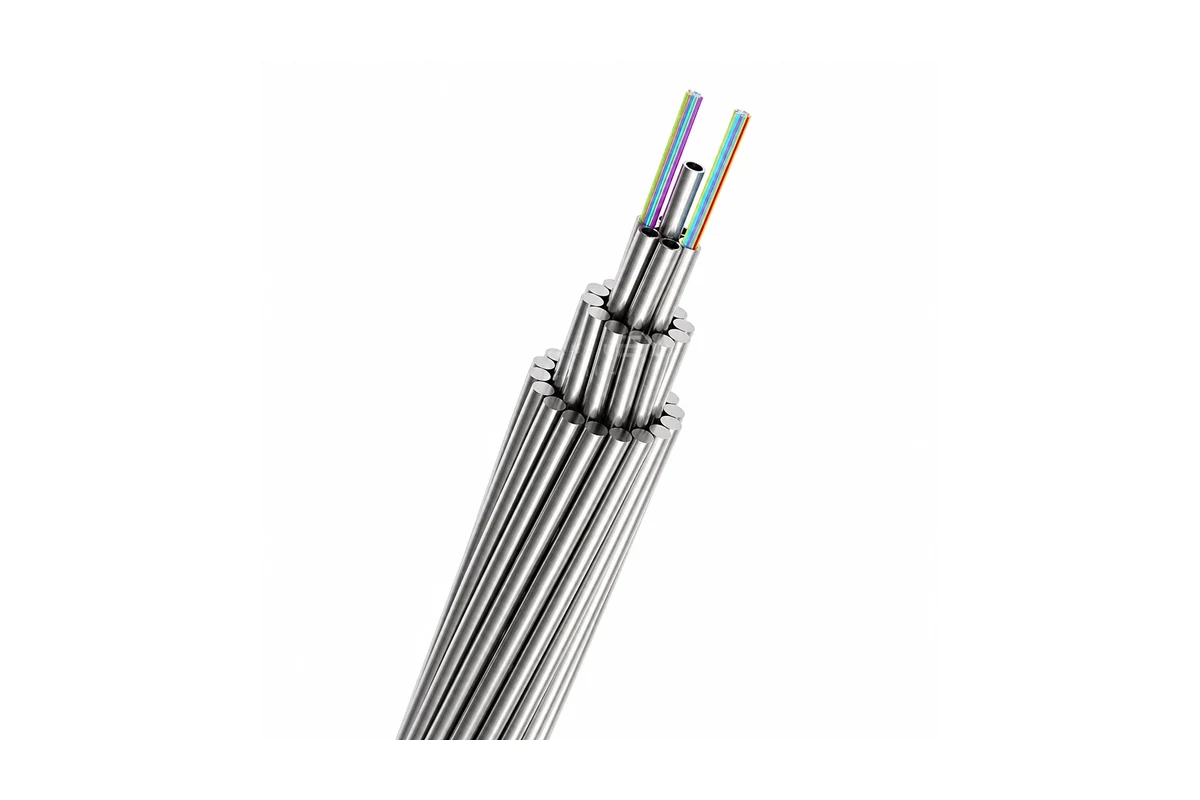
OPGW replaces or serves as the overhead shield wire. The metallic strands provide mechanical strength and an electrical path, while the optical unit inside carries communications. IEEE 1138 and IEC 60794-4-10 therefore address electrical, mechanical, optical and environmental performance—not optical performance alone.
One common search result can be misleading: saying that OPGW “suffers from electromagnetic interference” confuses the optical signal with the cable’s electrical role. The fibers transmit light, while the surrounding metallic structure is intentionally designed to conduct current.
Why an all-dielectric ADSS cable still needs electrical review
“All-dielectric” does not mean “safe in every position on every voltage level.” A wet or contaminated ADSS jacket can experience surface currents in a strong electric field. Tracking and dry-band arcing can damage an unsuitable jacket over time.
The utility or line designer should therefore confirm the attachment location, calculated space potential, pollution conditions and required jacket system. A standard polyethylene jacket should not be substituted for a tracking-resistant design without project approval. Line voltage by itself is not enough to select the jacket because conductor geometry, grounding and cable position also affect the local field.
How installation and maintenance differ
ADSS is frequently considered for brownfield communication upgrades because the existing shield wire can remain in service. Some ADSS systems can be installed on energized lines, but this is not an automatic permission: utility rules, clearances, crew methods and a route-specific safety plan control the work.
OPGW installation changes an electrical line component. On an existing route, replacement work often requires detailed outage, grounding, pulling and tower-loading planning. Specialized live-line OPGW installation is possible in some projects, so it is also inaccurate to claim that every OPGW job requires an outage.
The accessories are different too. ADSS hardware must grip a jacketed dielectric cable without crushing the optical core. OPGW hardware must handle a stranded metallic ground wire and preserve its mechanical and electrical continuity. Do not order clamps from cable diameter alone; the cable and hardware should be engineered as a matched system.
Which cable costs less?
There is no reliable answer from price per kilometer alone. Compare the total installed system.
For ADSS, include the cable, jacket class, dead ends, suspension units, armor rods or vibration control where required, brackets, pole make-ready work, sag-and-tension design and live-line work controls.
For OPGW, include the cable’s electrical and mechanical design, tower-load verification, grounding and bonding, specialized stringing equipment, closures, downleads, outage or live-line plan, testing and commissioning.
An ADSS retrofit may cost less when the power-line ground wire does not need replacement. OPGW may offer stronger project economics on a new line because one installed component provides both grounding and communications. These are project patterns, not universal price rules.
How to choose between ADSS and OPGW
- Define the electrical function. Does the project need a new or replacement shield wire, or only an optical communication path?
- Classify the route. State whether it is a new line, an energized retrofit, a ground-wire replacement or a distribution-pole deployment.
- Provide engineering inputs. Include structure drawings, line voltage and geometry, minimum and maximum spans, wind and ice loading, temperature range, crossings, sag limits and attachment position.
- Add cable-specific requirements. For OPGW, provide fault-current and lightning requirements. For ADSS, provide the utility-approved electrical-field or jacket requirement.
- Compare complete systems. Review cable, hardware, closures, drum plan, installation method, testing, documentation and delivery—not the bare cable price.
If the project is still considering another self-supporting aerial construction, see ADSS Fiber Optic Cable vs Figure 8 Cable. For a route-specific ADSS example, review the ADSS Cable Kenya Selection Guide.
RFQ checklist for ADSS or OPGW cable
- Route type, line status and structure drawings.
- Fiber count, fiber type and communication requirements.
- Span schedule, wind/ice load, temperature and terrain crossings.
- Attachment position and utility standard.
- ADSS jacket/electrical-field requirement, or OPGW fault-current and lightning requirement.
- Cable, dead-end, suspension, vibration-control, downlead and closure requirements.
- Drum-length plan, quantity, destination country and required documents.
- Installation, optical testing and acceptance responsibilities.
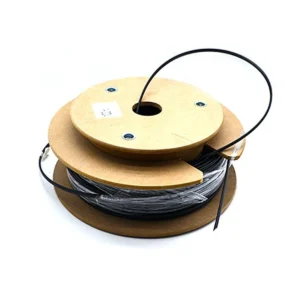
NetLast has current pages for a 12 Core ADSS Fiber Optic Cable and a 48 Core OPGW Optical Ground Wire. Use the exact product page, datasheet and project review to confirm whether either model fits your route; do not transfer one model’s ratings to another cable.
FAQs
Can ADSS replace an overhead ground wire?
No. ADSS is a communication cable and is not designed to provide the grounding, lightning-shielding or fault-current function of OPGW.
Is OPGW always better for high-voltage lines?
No. OPGW is appropriate when the project needs a ground-wire function. ADSS can also be used in transmission environments when its attachment point, jacket, span design and hardware are approved for the route.
Can ADSS and OPGW use the same hardware?
Generally no. Their surfaces, load transfer and electrical duties differ. Use accessories qualified for the exact cable construction and project load.
Is ADSS cheaper than OPGW?
ADSS often has an installation advantage for communication-only retrofits, while OPGW can be economical when a new or replacement ground wire is already required. Compare compliant installed cost rather than cable price alone.
What information is most important for an accurate quotation?
Start with the route and electrical function, then provide span/loading data, structure and attachment details, fiber requirements, cable-specific electrical inputs, hardware, drum plan, quantity, destination and required tests.
Need an ADSS or OPGW cable review?
Send NetLast your line drawings, span schedule, loading case, electrical requirements, fiber count, hardware list, drum plan, quantity and destination. We can review the RFQ inputs, identify missing specifications and discuss a suitable cable-and-hardware configuration.