What Is FTTH Drop Cable? Types, Selection and RFQ Guide
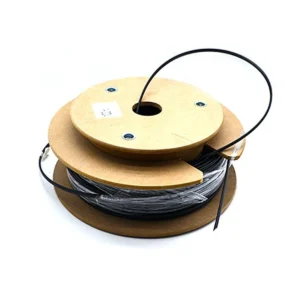
An FTTH drop cable is the last optical cable between the access point in a fiber distribution network and the subscriber's optical network terminal (ONT). The access point may be a pole-mounted terminal, wall box, closure, floor distribution box or another hand-off point close to the customer. The drop cable completes the last-mile connection into a house, apartment, office or small business.
That definition sounds simple, but buyers should not treat every drop cable as interchangeable. A cable routed through an apartment hallway has different jacket, fire-performance and handling requirements from one installed on a façade, pulled through a duct or suspended from a pole. The right specification starts with the installation route, then confirms fiber category, cable structure, strength member, jacket, termination and packing.
This guide is written for ISPs, contractors, distributors and integrators preparing an FTTH bill of materials or request for quotation.
Where FTTH drop cable sits in the network
The Fiber Optic Association describes the drop segment as the last optical section of the optical distribution network (ODN), between the optical access point and the ONT. Upstream of it are feeder and distribution cables; downstream is the subscriber equipment.
In practical procurement terms, the drop cable must match both sides of that connection:
- the terminal or closure port at the network side;
- the installation route between network and premises;
- the wall outlet, optical termination box or ONT at the customer side;
- the connector, splice or hardened interface used at each end.
Drop cable routes may be aerial, underground, or indoor. That is why “1-core FTTH drop cable” is not enough information for a reliable quotation.
Quick comparison of common FTTH drop cable types
| Drop cable type | Typical route | Main buying decision |
|---|---|---|
| Flat indoor drop cable | Hallway, riser exit, apartment or office | Indoor jacket requirement, bending and termination method |
| Outdoor flat drop cable | Façade, short outdoor route or protected duct | Weather exposure, jacket and mechanical rating |
| Self-supporting aerial drop cable | Pole-to-building span | Messenger/strength design, span and installation hardware |
| Round indoor/outdoor drop cable | Duct, façade, pole or mixed route | Cable diameter, route transitions and terminal compatibility |
| Pre-connectorized drop cable | Fast subscriber activation | Connector interface, pulling-eye/protection and exact length |
| Toneable or direct-burial design | Underground route where cable location matters | Conductor/locating requirement, grounding plan and burial method |
These are common market formats, not universal specifications. The same marketing name can describe different construction details from different manufacturers, so compare datasheets rather than names alone.
1. Flat indoor FTTH drop cable
Flat indoor drop cable is widely used for the final run inside or near customer premises. A common bow-type construction places one or more optical fibers near the center, with parallel strength members and an outer jacket. The flat profile supports compact routing and controlled stripping, but the actual dimensions, strength-member material and jacket rating vary.
For an indoor RFQ, confirm:
- required fiber count;
- G.657 fiber subcategory specified by the operator;
- cable dimensions and minimum bend requirements;
- strength member material, such as metallic or non-metallic options;
- jacket material and the flame/smoke requirement applicable to the building and destination market;
- whether the cable will be spliced, field-connectorized or factory terminated.
Do not assume that the word “LSZH” alone proves compliance with a local building code. Ask for the exact cable standard and test documents required by the project.
2. Outdoor and indoor/outdoor drop cable
An outdoor drop route may cross a façade, enter a duct, pass through a handhole or transition into a building. Outdoor and indoor/outdoor products are designed for different exposure conditions, so the buyer should map where the cable begins, where it enters the building and whether a splice or transition point is planned.
Important questions include:
- Is the route exposed to sunlight, rain or standing water?
- Will the cable be installed in a duct, buried, clipped to a wall or suspended?
- Does the cable enter an occupied building, and if so, what indoor rating is required?
- What pulling load, crush load and bend radius apply during installation?
- Is water blocking or rodent protection required by the project?
Use the manufacturer’s current datasheet for the actual tensile, crush, temperature and bend limits. Those values should not be copied from a visually similar cable.
3. Self-supporting aerial drop cable
Self-supporting aerial drop cable is used when the final connection must span from a pole or aerial terminal to a building. Depending on the design, the load-bearing element may be integrated into the cable or provided as a separate messenger in a figure-8 profile.
The cable must be selected together with the route and hardware. Send the supplier the pole-to-building span, expected sag method, fixing points, local wind/ice conditions and the clamp type planned by the installer. A generic “outdoor drop cable” description does not confirm that a product is suitable for an aerial span.
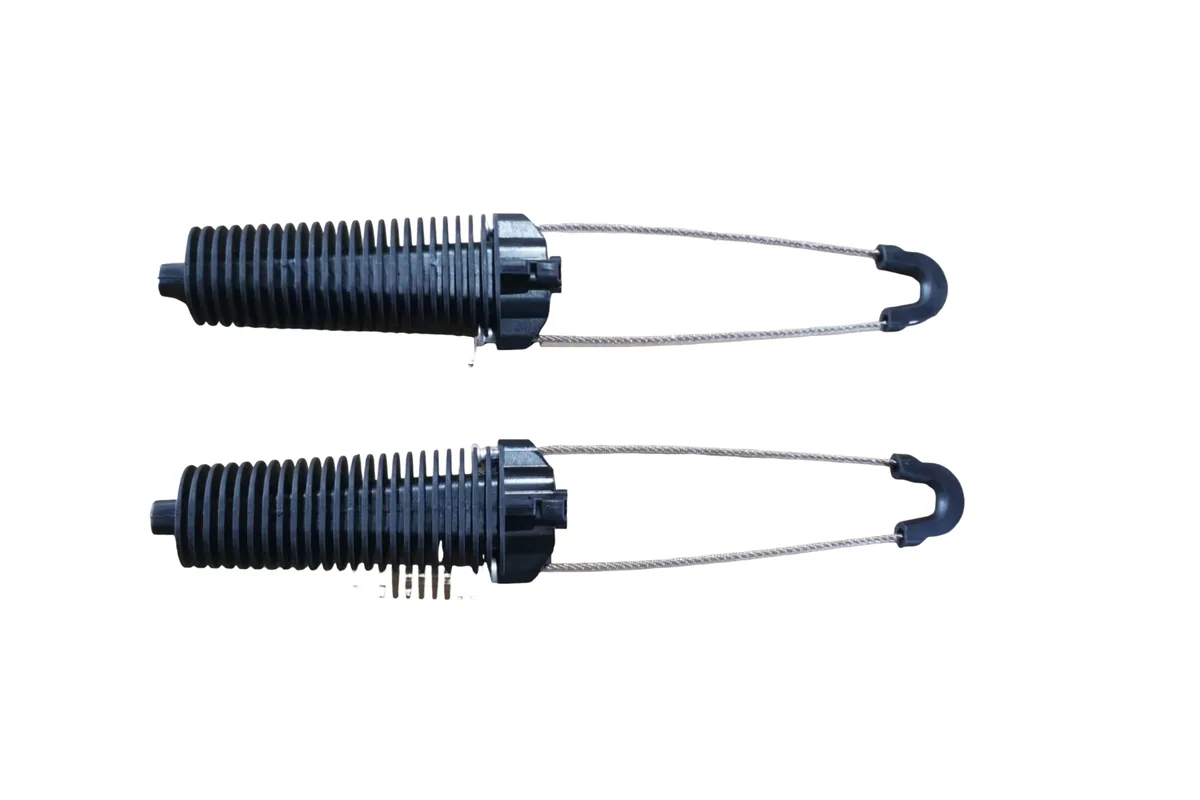
The clamp image above is useful when discussing the installation interface, but the installer still needs to confirm that the selected clamp and cable construction are compatible. Clamping force, cable profile and messenger arrangement should be checked as a system.
4. Pre-connectorized and hardened drop cable
Pre-connectorized drop cable arrives with a factory-installed connector or hardened outdoor interface. It can reduce field splicing and help standardize subscriber activation, especially when terminals and drop assemblies are designed as a plug-and-play system.
The connector name is only one part of the order. Confirm:
- network-side and customer-side connector or hardened interface;
- APC or UPC polish where a conventional connector is used;
- cable length and allowed length tolerance;
- pulling-eye, dust cap and connector protection during installation;
- cable diameter and the port sealing range of the terminal;
- labeling, serial or batch identification;
- insertion-loss test documentation required for each assembly or batch.
NetLast’s verified product catalog includes preconnected drop-cable products and a ROC toneable flat drop cable. Use the specific product datasheet to confirm whether its structure and termination match your project.
Which fiber type should be specified?
ITU-T G.657 covers bending-loss-insensitive single-mode fiber and cable intended for access networks and space-constrained installations. The current recommendation distinguishes category A and category B applications and specifies different bend-performance levels.
For most purchasing decisions, the important point is not to write only “single-mode fiber.” State the exact operator-approved category, commonly G.657.A1 or G.657.A2 for access-network products, and confirm compatibility with the rest of the link. ITU-T’s current recommendation lists minimum design radii of 10 mm for G.657.A1 and 7.5 mm for G.657.A2; these are fiber-category values, not permission to ignore the cable manufacturer’s larger minimum bend radius.
Always follow the finished cable datasheet and installation instructions. The cable structure, strength members, jacket and connector boot can limit bending before the fiber itself does.
How to select the right FTTH drop cable
Start with the complete route
Mark the route as indoor, outdoor, duct, façade, buried or aerial. If the route changes, identify the transition point. This immediately narrows the suitable jacket and structure.
Confirm mechanical requirements
Provide span, pulling method, conduit size, expected bend points and installation hardware. Ask the manufacturer for rated tensile, crush and bend values for the exact model under quotation.
Match the terminal interface
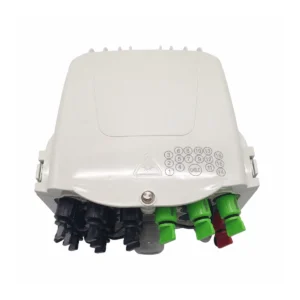
Confirm cable entry diameter, sealing method, connector interface and available bend-management space inside the distribution box or closure. A cable can meet optical requirements but still be difficult to seal or route inside the selected enclosure.
Specify termination and length
State whether each end is bare, spliced, field-connectorized or pre-terminated. For pre-connectorized assemblies, provide the exact end-A/end-B interface, polish, overall length, tolerance and connector protection method.
Define identification and packing
For project orders, agree on drum or coil length, meter marking, cable print, labels, carton or drum protection and destination shipping marks. Clear batch identification makes incoming inspection and field issue tracking easier.
RFQ checklist for FTTH drop cable
| RFQ field | Information to send |
|---|---|
| Application | Indoor, outdoor, façade, duct, buried or aerial |
| Route | Length, transitions, span and installation method |
| Fiber | Count and exact fiber category required |
| Cable structure | Flat, round, figure-8, toneable or other approved design |
| Strength member | Metallic/non-metallic requirement and messenger arrangement |
| Jacket | Material, color and required standard/test |
| Mechanical ratings | Project tensile, crush and bend requirements |
| Termination | Bare, pigtail, conventional connector or hardened interface |
| Connector details | Type, polish, end-A/end-B and protective pulling arrangement |
| Length and packing | Piece length, tolerance, coil/drum and labeling |
| Quantity | Total pieces/meters and required delivery batches |
| Documentation | Datasheet, test report, marking sample, packing photo or inspection record |
| Destination | Country, delivery point and any project-specific compliance need |
If you already have a route drawing, terminal-box model or BOM, send it with the table. It is more useful than a product name alone.
Production and quality checks buyers can request
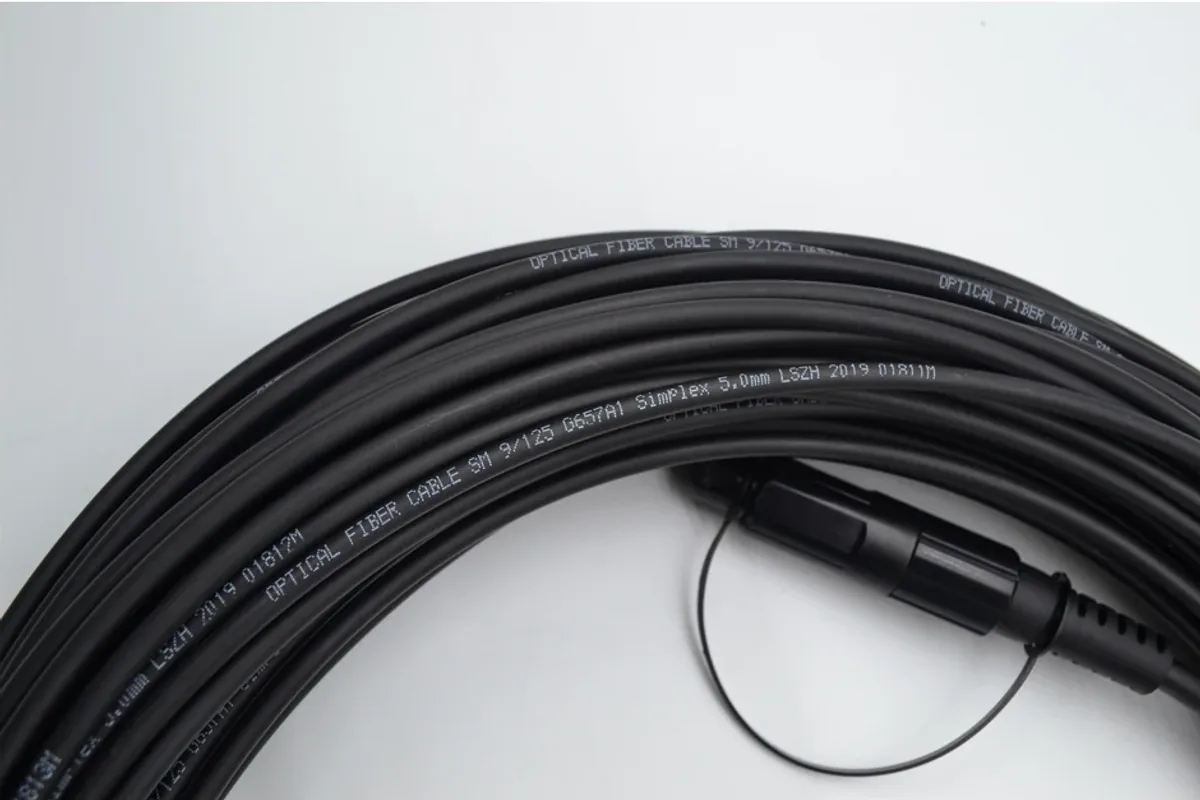
For cable orders, a real production image helps confirm that the supplier has access to relevant manufacturing and handling processes, but it does not replace inspection records. Buyers should connect visual evidence to the exact order and request the documents that matter to the project.
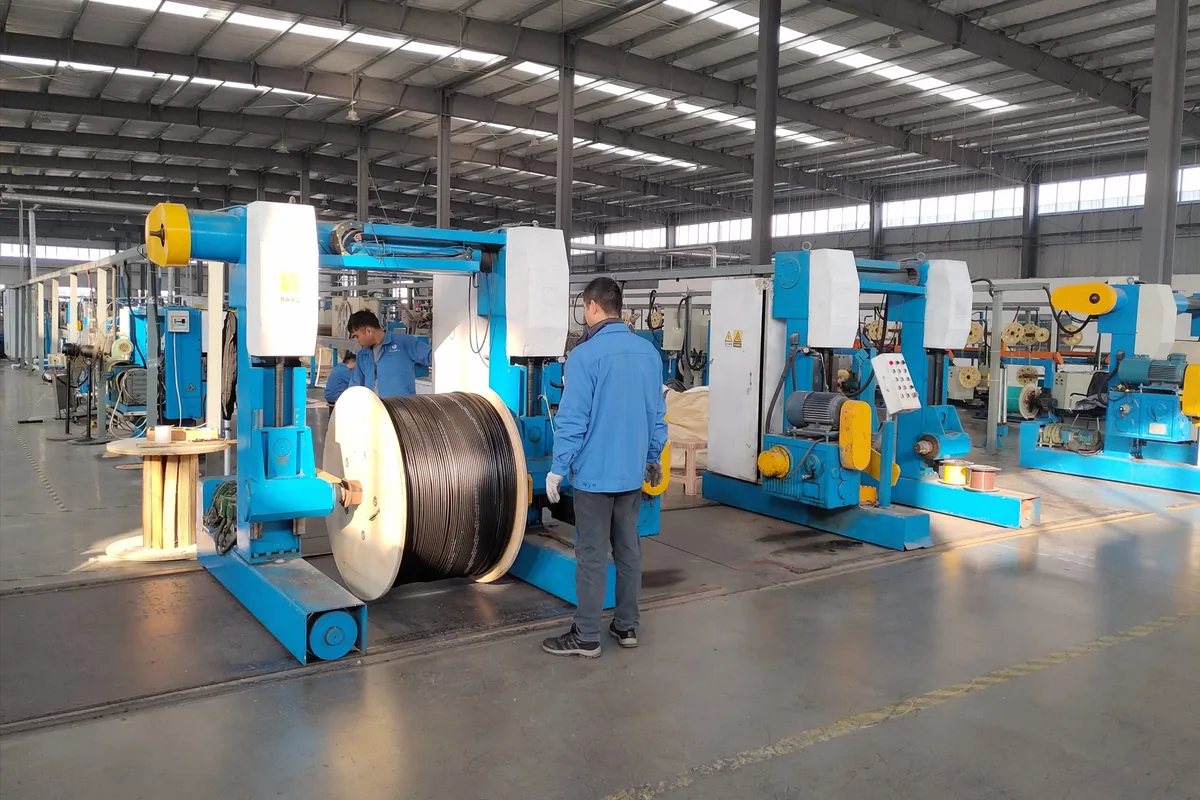
Useful pre-shipment checks can include:
- approved datasheet and construction drawing;
- cable-print and meter-marking sample;
- fiber count, jacket color and dimensional checks;
- optical attenuation or finished-assembly insertion-loss results as applicable;
- drum/coil length and label verification;
- connector end-face and polarity checks for terminated assemblies;
- packing photos and export marks;
- batch or serial traceability agreed before production.
The exact acceptance plan should be written into the purchase order. Avoid adding a new test after production unless the supplier has confirmed the method, sample size and acceptance criteria.
Common ordering mistakes
Ordering by appearance
Two black flat cables can have different fiber, strength member, jacket, dimensions and mechanical ratings. Use a confirmed model and datasheet.
Mixing indoor and outdoor requirements
A weather-resistant outdoor jacket may not meet the indoor fire requirement for the section inside a building. Define where the transition happens.
Leaving aerial span unspecified
Self-supporting construction and clamps must be matched to the span and environmental load. Do not let the supplier guess.
Forgetting terminal compatibility
Check port diameter, sealing range, bend-management space and connector interface before ordering cable and boxes separately.
Requesting a connector without end details
“SC/APC drop cable” does not identify both ends, cable length, protection, tolerance or terminal interface. Provide an end-A/end-B schedule.
FAQs
What is the difference between FTTH drop cable and distribution cable?
Distribution cable carries fibers through the neighborhood or building distribution network, while drop cable completes the final connection from an access point to the subscriber ONT. Drop cable is usually selected for shorter, route-specific customer connections.
Is G.657.A2 always better than G.657.A1?
G.657.A2 has tighter bend-performance requirements, but “better” depends on the operator standard, compatibility and price target. Specify the category approved for the project and follow the finished cable’s bend limit.
Can one drop cable be used both outdoors and indoors?
Only when the product is rated for both parts of the route and meets applicable building requirements. Confirm the exact indoor/outdoor rating and local code rather than assuming from jacket color.
Should an aerial drop cable include a messenger wire?
Many aerial designs use an integrated messenger or a load-bearing element, but the correct construction depends on span, hardware and installation method. Provide the route and clamp details to the supplier.
What information is most important for a quotation?
Send the route, fiber count/category, structure, jacket, strength member, termination, length, quantity, packing, destination and required tests. Add the terminal or closure model when the cable must mate with a specific port.
Need help matching drop cable to your FTTH route?
Send NetLast your route drawing or installation description, fiber count and category, indoor/outdoor sections, aerial span or duct details, cable structure, connector interfaces, piece length, quantity, packing requirement, delivery country and required test documents. We can review the specification and organize a matching FTTH drop-cable quotation.
Send Your FTTH Drop Cable Requirements
Related distribution-point guide: After selecting the FTTH drop cable, confirm that its assembly matches the terminal port. Review our fiber access terminal box selection checklist for connector, splitter, input and testing requirements.