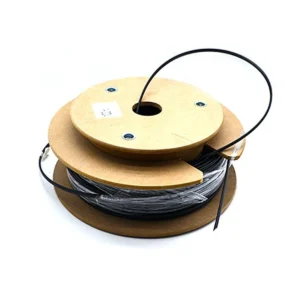
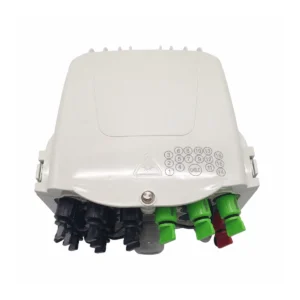
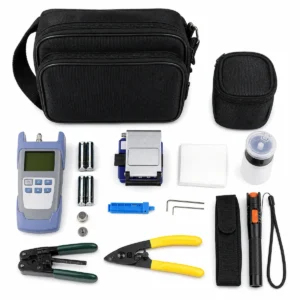
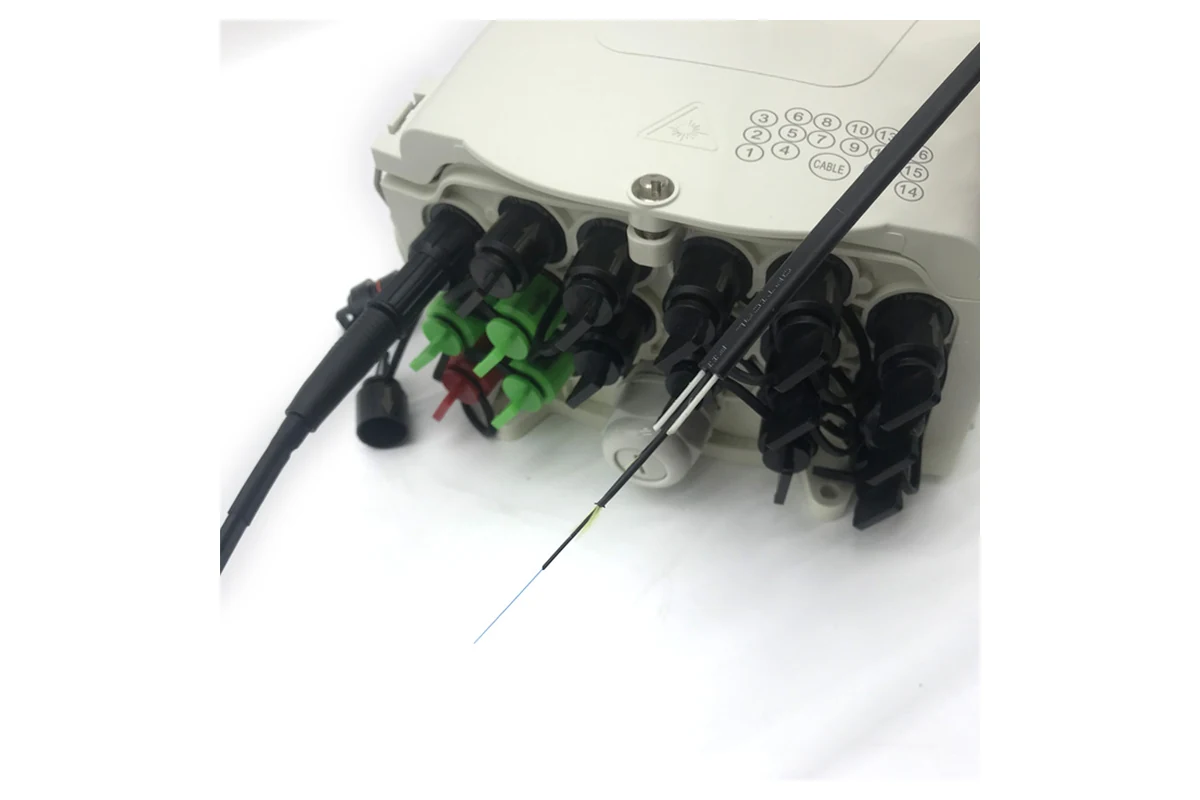
A pre-connectorized fiber access terminal box is an FTTH distribution point with factory-installed optical interfaces for connecting subscriber drop cables. It can reduce outdoor splicing and speed up service activation, but it is only truly plug-and-play when the terminal ports, drop connectors, splitter plan, input cable and test requirements are designed as one compatible system.
For buyers comparing a fiber access terminal (FAT), network access point (NAP), pre-connected fiber distribution box or terminal box with an HW-type connector, the enclosure name is not enough. The safest selection method is to confirm the network function first and the connector mating interface second, then define capacity, optical topology, environmental exposure and acceptance testing.
What is a pre-connectorized fiber access terminal box?
A fiber access terminal box is the connection point between the distribution side of an FTTH network and the individual drop cables serving subscribers. Depending on the design, the box may provide cable entry, fiber storage, splicing, splitting, adapters and protected output ports.
In a pre-connectorized version, one or more interfaces are factory terminated. An installer can connect a matching drop-cable assembly without preparing and terminating that interface in the field. This can make deployment more repeatable and reduce the work performed inside an outdoor enclosure.
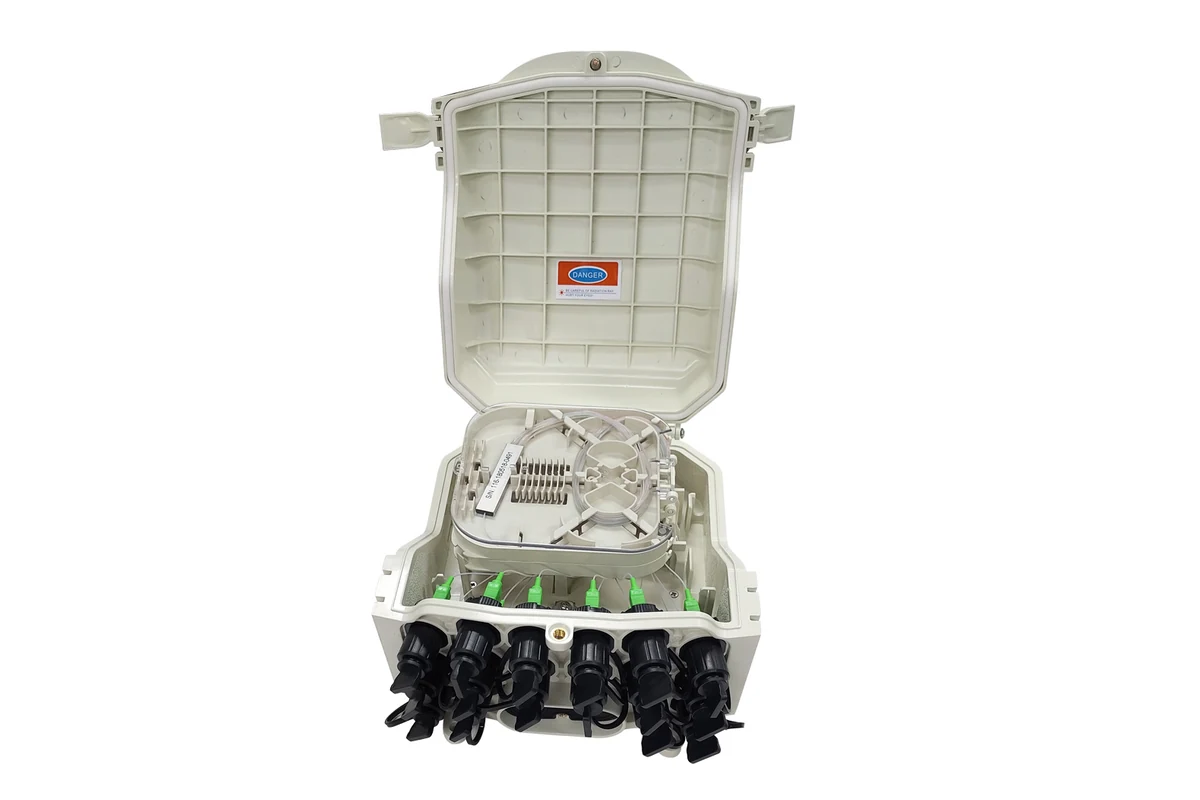
Pre-connectorized does not necessarily mean that every internal connection is connectorized. A terminal can have a factory-installed input stub that is spliced upstream, a connectorized input, an internal PLC splitter, adapter-only outputs or other architectures. The approved drawing and bill of materials must state what is supplied.
FAT, NAP, terminal box or distribution box: which term is correct?
Search results and project documents use several overlapping names:
- fiber access terminal box or FAT;
- fiber distribution terminal or FDT;
- network access point or NAP;
- FTTH terminal box;
- pre-connected or pre-connectorized fiber distribution box;
- multi-service terminal or MST.
These labels are not applied identically by every operator or manufacturer. A useful RFQ should therefore describe the required function rather than depend on the product name alone. State where the unit sits in the topology, whether it receives a feeder or distribution cable, whether it includes a splitter, and how each subscriber drop connects.
Pre-connectorized FAT box selection checklist
| Selection point | What to confirm | Why it matters |
|---|---|---|
| Network role | Distribution point, splitter terminal, tap terminal or pass-through point | Determines the internal optical path and required hardware |
| Connector interface | Exact family, mating geometry, keying, adapter and approved reference | Similar-looking hardened connectors may not be interchangeable |
| End-face polish | APC, UPC or another specified interface | Mismatched polish can prevent a correct optical connection |
| Input architecture | Factory stub, connectorized input, field-splice input or pass-through | Changes upstream installation, cable length and closure requirements |
| Output capacity | Active subscribers, planned growth, restoration spare and cascade plan | Prevents under-sizing or buying unused capacity without a network reason |
| Splitter configuration | No splitter, preloaded splitter, ratio and input/output arrangement | Affects optical budget, port mapping and future expansion |
| Drop-cable assembly | Connector at both ends, cable construction, length and routing method | The terminal and the drop must be ordered as a compatible system |
| Installation environment | Pole, wall, pedestal, chamber or other approved location | Drives mounting, cable entry, sealing and handling requirements |
| Inspection and testing | End-face inspection, cleaning method, insertion-loss test and traceability | Factory termination does not remove field acceptance work |
The practical rule is simple: do not approve a terminal from the front-view photo alone. Request the port drawing, internal configuration, input method and a complete connector-to-connector path.
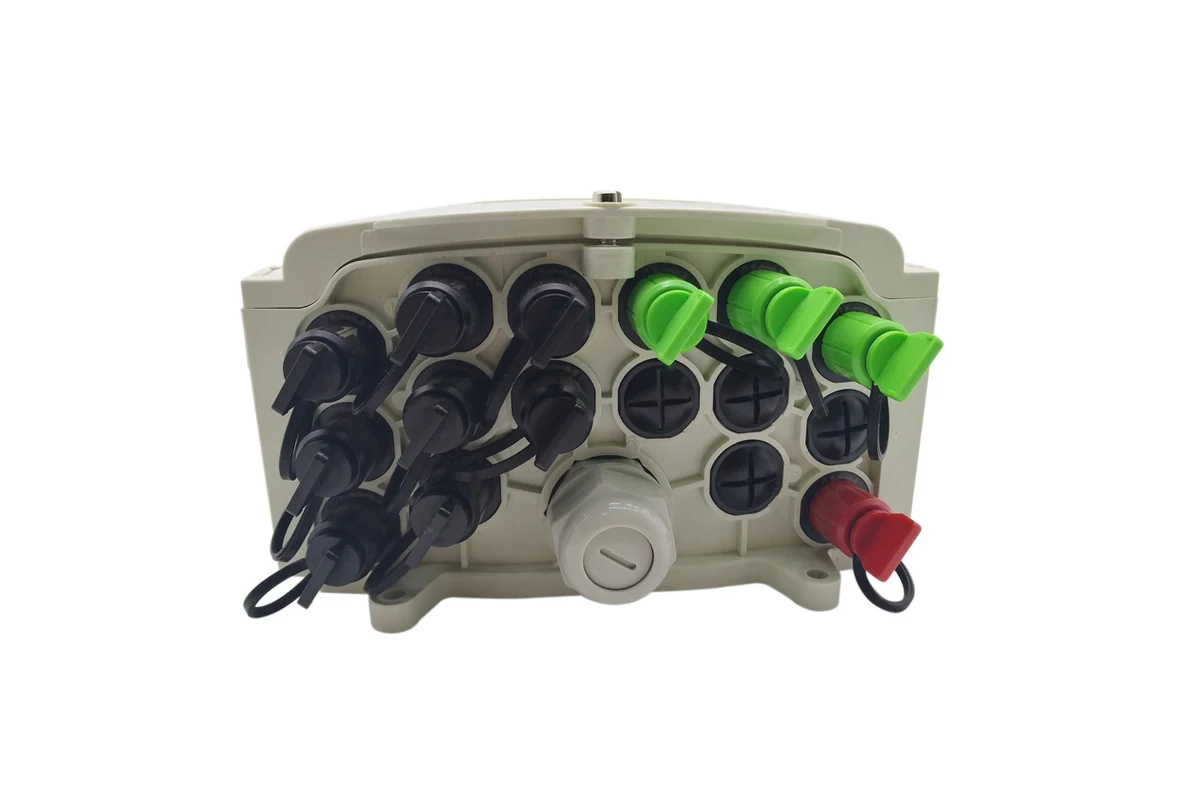
Is an HW connector the same as Mini SC or FastConnect?
Do not assume that “HW connector,” “Mini SC,” “FastConnect,” “H connector” and “hardened SC/APC” are interchangeable descriptions.
“HW connector” may be used by a buyer, installer or supplier as shorthand for a project interface, but it does not fully define the mating geometry. VIAVI’s FTTH terminal inspection guide lists several separate hardened terminal ecosystems, including Huawei FAT2808 FastConnect, Corning OptiTap, Corning Pushlok, CommScope MST, FiberHome FitDP and ZTE FebS interfaces. This is a strong reason to verify the exact interface instead of buying by appearance or a loose market name.
For an HW-type connector project, request at least:
- the connector and adapter drawing;
- a confirmed mating reference or approved sample;
- the alignment, keying and locking method;
- the ferrule and end-face polish specification;
- the dust-cap and installation-tool requirements;
- a factory mating test and project acceptance criteria.
If a replacement terminal must mate with an installed network, send clear photos, the existing model reference and—when possible—a physical sample. A green housing or similar external shape is not proof of compatibility.
Choose the number of ports from the service plan
Port count should follow the network design, not just the number of homes connected on installation day. Begin with the homes passed and expected take rate, then consider spare capacity, restoration policy, splitter utilization, downstream cascading and the operator’s standard terminal sizes.
For example, leaving sensible reserve capacity can simplify later activations, but excessive unused ports increase equipment cost and may complicate inventory. A compact terminal may fit a small cluster, while a higher-capacity terminal can reduce the number of boxes but concentrate more subscribers at one point. There is no universal best port count.
The RFQ should state both the required output count and the reason for it: “ports for current service plus project reserve” is more useful than asking for a generic 8-port or 16-port box.
Splitter-loaded, adapter-only or pass-through?
A fiber access terminal box can perform different optical functions:
- Splitter-loaded terminal: divides one or more optical inputs among multiple subscriber outputs. The splitter ratio and optical budget must be confirmed.
- Adapter or distribution terminal: provides connectorized interfaces without assuming an internal split. Confirm how the fibers are routed or spliced.
- Pass-through or tap arrangement: continues part of the distribution capacity while serving local drops. The exact topology must be shown on the drawing.
Two boxes with the same external port count can therefore require different upstream fibers, produce different loss budgets and support different expansion plans. Ask for the internal schematic and port map before comparing prices.
For more on the function of the splitter itself, see What Is a PLC Splitter in an FTTH Network?
Stubbed input or connectorized input?
A factory-installed cable stub can move some termination work away from the subscriber terminal, but the stub still needs an approved upstream splice or connection point. Its cable type, length, fiber count, routing direction and tail preparation must fit the installation method.
A connectorized input can make terminal replacement or network assembly faster when the upstream cable uses the matching interface. It also adds another connector pair to the optical path and requires access for inspection, cleaning and testing.
Field-splice input designs may give an installer more flexibility over incoming cable length, but they require splice tools, trained labor, splice protection and suitable working space. Compare the completed installed process rather than only the terminal price. Our related guide explains the broader trade-off in Pre-Connectorized FTTH Cable vs Field Termination.
Installation and acceptance checklist
Pre-connectorized hardware reduces some field work; it does not remove installation discipline. A practical field checklist should include:
- verify the approved box, mounting accessories and port map before climbing or opening the route;
- mount the enclosure in the approved orientation and keep the sealing surfaces clean;
- route incoming and drop cables without exceeding the specified pulling load or bend limits;
- inspect and clean every optical interface before mating, including factory-terminated connectors;
- mate only the approved connector family and fully engage the locking mechanism;
- keep unused ports sealed with the correct caps;
- label the input, splitter path and subscriber outputs consistently;
- perform the project-defined optical measurements and record results by port;
- close the enclosure and verify cable-entry and port sealing after work is complete.
Corning describes hardened connector systems as factory-terminated and tested plug-and-play solutions, while also publishing dedicated inspection and cleaning guidance. The two points belong together: factory termination can improve repeatability, but a contaminated or incorrectly mated field connection can still affect performance.
RFQ checklist for a pre-connected fiber terminal box
To receive a comparable quotation, send the supplier:
- project topology or route drawing;
- required product function and installation location;
- exact input method and input cable details;
- connector family and approved mating reference at every interface;
- required output-port count and reserve strategy;
- splitter requirement, ratio and port mapping, if applicable;
- drop-cable construction, connector, length and quantity;
- mounting method, cable-entry direction and environmental requirement;
- labels, serial-number or traceability requirements;
- inspection, optical test and report requirements;
- packing, spare parts and installation accessories;
- order quantity, destination country and delivery schedule.
NetLast’s 16 Port MST Fiber Optic Waterproof Box is a current example of this product family. Confirm the exact connector interface, internal optical configuration and current datasheet against your project before ordering.
Need a compatible FTTH terminal-box quotation?
Send NetLast the network diagram, an existing connector reference or sample, planned subscriber count, splitter plan, input and drop cable requirements, installation environment, test requirements, quantity and destination. We can check the interface and BOM information that must be confirmed before quotation.
FAQs
What is a fiber access terminal box?
A fiber access terminal box is an FTTH distribution point that connects the distribution side of the network to subscriber drop cables. Depending on the design, it may include splicing, splitting, adapters, fiber storage and protected output ports.
What is the advantage of a pre-connectorized terminal box?
It can reduce field termination at the subscriber distribution point and make activation more repeatable when factory-terminated ports and matching drop assemblies are used. Installation time still depends on mounting, routing, inspection, cleaning, mating and testing.
Are all hardened fiber connectors compatible?
No. Different hardened connector families can have different alignment, keying, locking and adapter designs. Confirm the exact interface, approved mating reference and test requirement rather than relying on appearance or color.
Does every pre-connected FAT box include a PLC splitter?
No. Some terminals are splitter-loaded, while others provide adapters, distribution, pass-through or different internal arrangements. The internal schematic and bill of materials must identify what is included.
What information is needed to order an HW connector terminal box?
Provide the connector drawing or approved sample, mating equipment reference, input topology, output-port count, splitter requirement, cable assemblies, mounting environment, labels, testing, quantity and destination. “HW connector” alone is not a complete interface specification.
Should factory-terminated connectors be inspected in the field?
Yes. Inspect and clean interfaces according to the approved procedure before connection. Factory testing documents the supplied assembly; field acceptance verifies the completed installed path.