SC/APC vs SC/UPC: What Changes—and Why You Should Never Mix Them
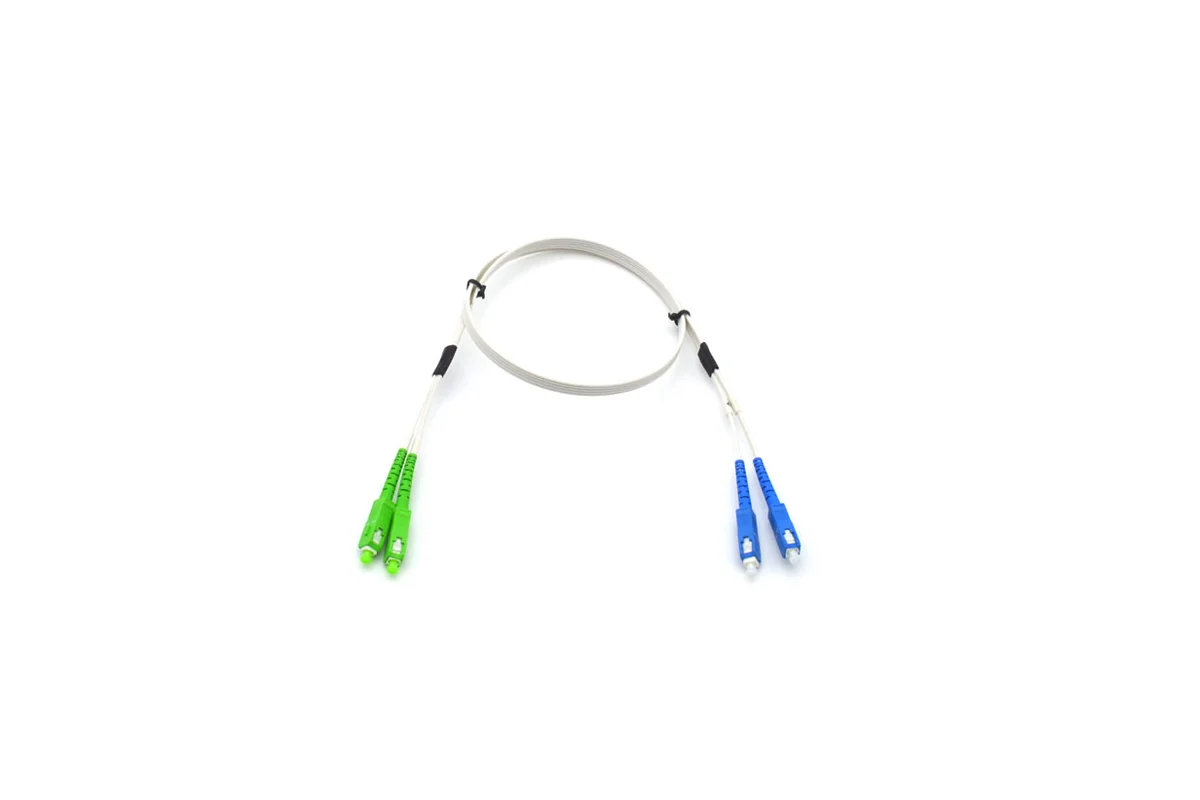
A green SC connector and a blue SC connector can fit the same adapter body. That is exactly why mistakes happen. The plastic shell looks familiar, the latch clicks, and the link may even pass some light—but the polished fiber end faces are not designed to meet each other.
If a drawing says only “SC connector,” the specification is unfinished. You still need to confirm APC or UPC at every port.
The short answer
SC/APC uses an angled physical-contact end face, commonly polished at 8 degrees. SC/UPC uses an ultra physical-contact finish with a convex, non-angled mating surface. APC is designed to send reflected light away from the fiber core, which is why it is widely used in reflection-sensitive single-mode networks.
The two types should not be mated together.
| Check | SC/APC | SC/UPC |
|---|---|---|
| Common identification | Green | Blue |
| End-face geometry | Angled physical contact | Non-angled ultra physical contact |
| Main optical advantage | Lower back reflection | A practical standard for many digital links |
| Common examples | FTTH/PON, CATV and other reflection-sensitive links | Ethernet, LAN, equipment and test connections that specify UPC |
| Directly compatible with the other polish? | No | No |
Colour is a useful warning, not the final specification. Always check the equipment port, adapter, label and drawing.
Return loss is the real reason APC exists
This is where many product descriptions become misleading. APC is not simply a “lower insertion-loss connector.” The Fiber Optic Association notes that there is no meaningful statistical difference in connector loss between properly made APC and UPC connections. The important difference is reflectance.
At an APC connection, the angled end face directs reflected light into the cladding instead of sending it back toward the transmitter. FOA describes reflectance around -60 dB as typical for APC, compared with roughly -40 to -50 dB for physical-contact finishes. Project specifications and actual test results still take priority over a generic number.
For buyers, the practical lesson is simple: choose the polish required by the system—not the one that sounds more premium.
Why SC/APC appears so often in FTTH
FTTH links are single-mode, often short, and include several passive connection points. Reflected light can travel back through the same optical path, so designers frequently use SC/APC at splitters, distribution boxes, drop-cable terminations and ONT-side connections.
That does not mean every FTTH device automatically has an APC port. Some equipment, test instruments and existing panels use UPC. Read the port marking and equipment documentation before ordering a patch cord or pigtail.
If the two ends of a link require different connector types, order a correctly specified hybrid assembly. Do not improvise by mating APC and UPC through an adapter.
What happens when APC and UPC are mixed?
The ferrules can enter the same SC adapter, but their surfaces meet at the wrong geometry. Instead of full physical contact, part of the end face is forced against the other at an angle. The result can include high loss, unstable readings, poor return-loss performance and damaged end faces.
The frustrating part is that the mistake may not look dramatic. An installer may see optical power and assume the connection is acceptable. Later, the link becomes the first suspect when power margin changes or a connector is disturbed.
When troubleshooting, check both sides of every adapter. Do not rely only on the connector visible from the front of the panel.
Inspection tools must match the polish too

Inspection is not a one-tip-fits-all job. APC and UPC connectors require probe tips matched to their end-face geometry. A UPC probe tip may not focus properly on an APC end face, and the reverse is also true.
Clean and inspect before mating, then inspect again if the result is still poor. A dirty connector and a polish mismatch can create similar symptoms, but cleaning cannot fix the wrong interface.
A purchase order should never say only “SC patch cord”
Write the complete connector at both ends. A useful RFQ line looks like this:
SC/APC to SC/APC, OS2 single-mode, simplex, 2.0 mm LSZH, 3 m, quantity 500, individual test record required.
Also confirm:
- the connector and polish at end A and end B;
- fiber type and cable construction;
- simplex or duplex arrangement;
- finished length and tolerance;
- jacket material and diameter;
- insertion-loss and return-loss acceptance limits;
- label, packaging and test-report requirements.
For a fuller ordering checklist, see How to Choose a Fiber Optic Patch Cord.
Check the batch, not just the sample photo
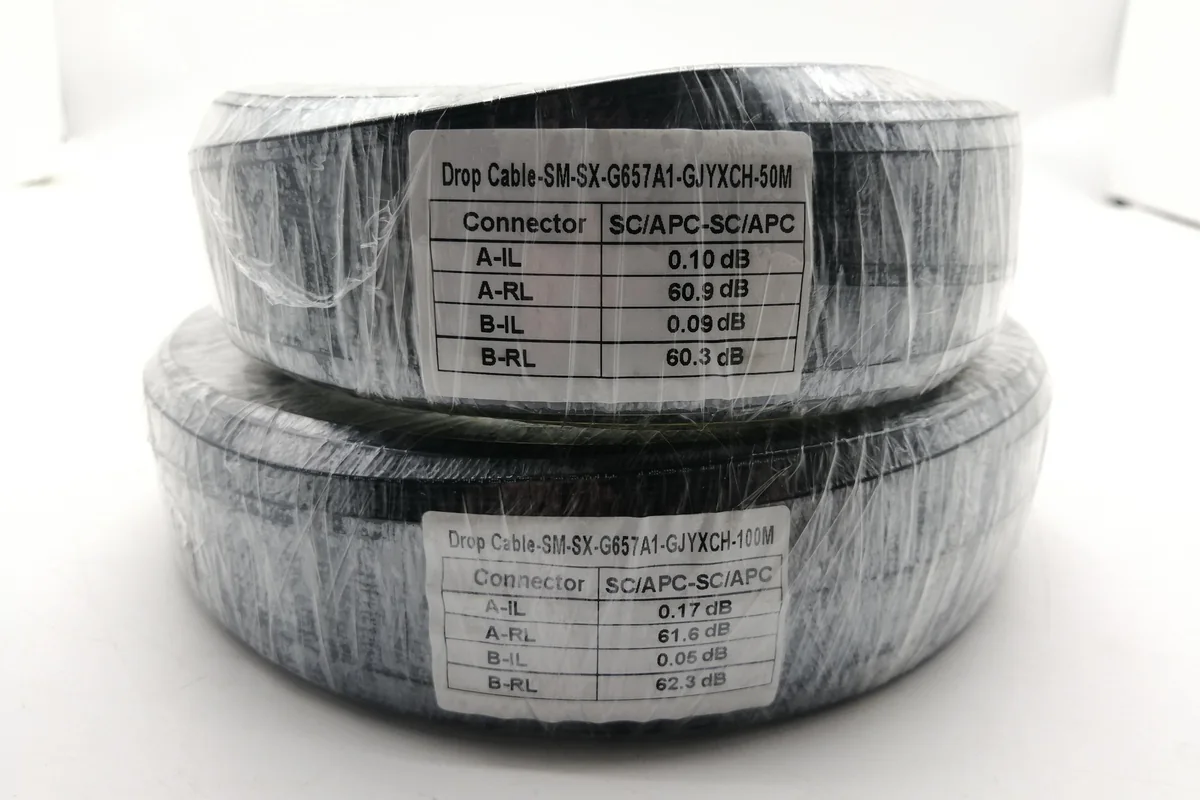
A product photo can confirm colour and general construction, but it cannot prove the delivered batch matches the order. On receipt, compare carton labels, cable markings and connector polish with the purchase order. For project-critical assemblies, agree on the test method and limits before production.
Keep APC and UPC stock in clearly separated bins. This small warehouse habit is cheaper than sorting a mixed shipment at the installation site.
Not sure whether your ports are APC or UPC?
Send NetLast a clear port photo, equipment model, connector list, cable length, quantity and required test limits. We can review the interface details before quotation and help you avoid a mixed-polish order.
FAQs
Is green always APC and blue always UPC?
Green and blue are widely used identification colours, but colour alone is not enough for acceptance. Verify the written connector specification, port marking and product label.
Does SC/APC always have lower insertion loss than SC/UPC?
No. APC’s main benefit is lower reflectance. Insertion loss depends on connector quality, cleanliness, alignment and the complete mating pair.
Can an SC/APC-to-SC/UPC patch cord be manufactured?
Yes, a hybrid cable can have APC at one end and UPC at the other. Each end must mate with a matching port. The two different polishes still should not be connected directly to each other.
Choosing a field-installable connector? Use our SC/APC vs SC/UPC fast connector selection guide to match the polish to the adapter and equipment before ordering.
Related question: After choosing APC or UPC, confirm whether the connection needs a two-ended jumper or a one-ended splice assembly in our guide to fiber optic patch cord vs pigtail.